1. Discuss the symptoms and service history
Explain which fixtures are affected, when the problem occurs, and how long earlier clearing helped. Mention known pipe damage, previous repairs, and any chemical products added to the drain. These details help the plumber understand the problem and avoid assuming that every recurring clog has the same cause.
Keep the likely access area clear and ask which plumbing should remain unused during the work. The visit’s sequence can vary with the property and the condition of the affected line.
2. Assess the line and available access
The plumber reviews access and the information available about the piping before deciding whether hydrojetting is appropriate. Where useful and possible, camera inspection can contribute to that assessment. A completely obstructed line may need an initial clearing before a useful view is available.
If the condition raises concerns about high-pressure cleaning, another method or a repair discussion may be more appropriate. The assessment should explain why the proposed approach fits the line.
3. Agree on the cleaning scope
Before cleaning begins, establish which line or section is included and what the work is intended to address. Access difficulties, the type of buildup, and any known defects can affect the plan. Ask how additional findings will be handled if they change the recommendation.
- Confirm the agreed cleaning area.
- Discuss limitations or conditions already identified.
- Ask about expected disruption to the affected plumbing.
- Understand how the result will be reviewed.
4. Clean the suitable line
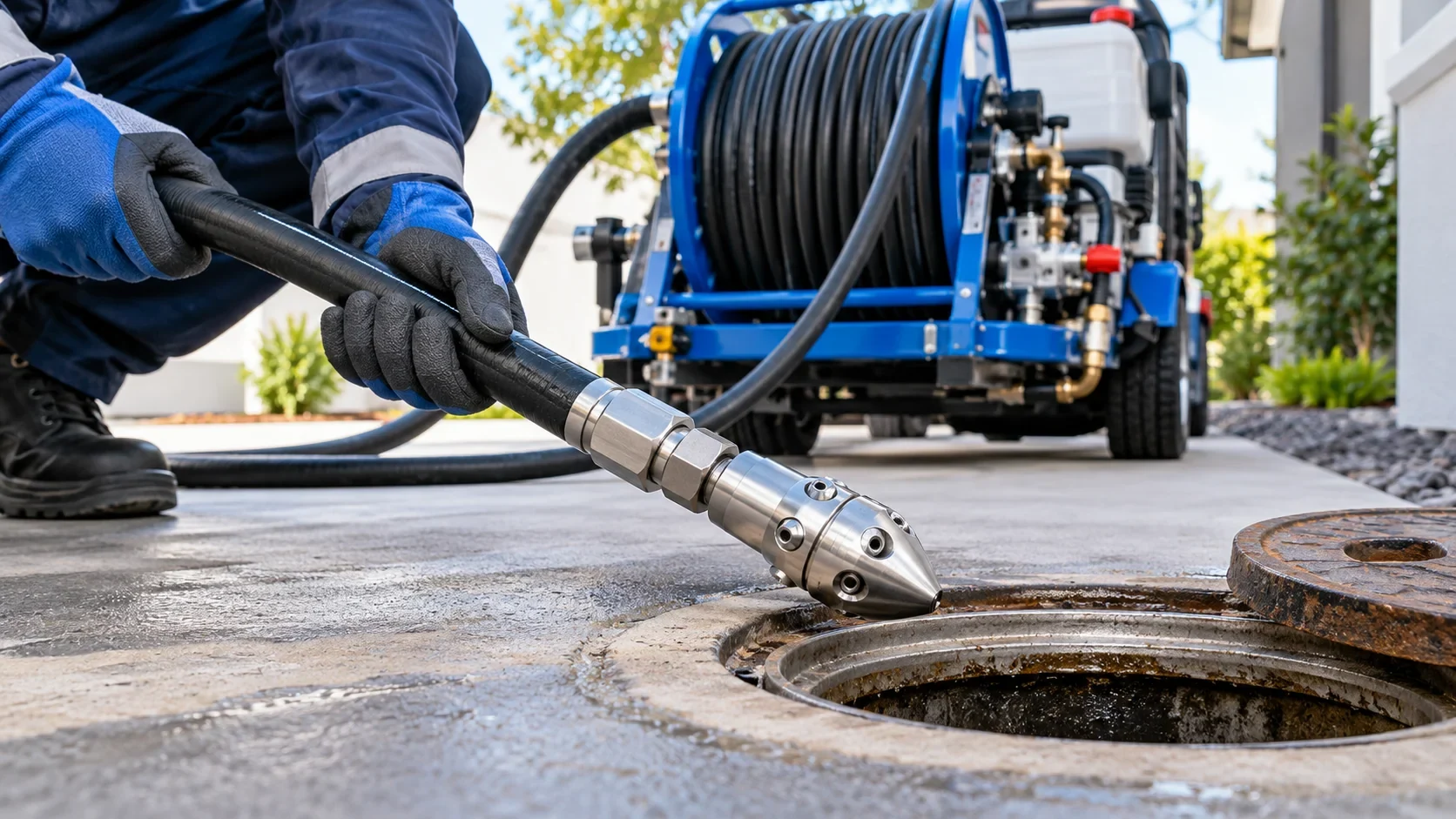
The plumber uses suitable hydrojetting equipment through the available access to clean the agreed piping. The method and equipment are chosen for the line and buildup. This is professional equipment; the procedure should not be treated as a household pressure-washer project.
The purpose is to remove accumulated material where the line is suitable for cleaning. It cannot repair a crack, restore a deteriorated joint, or guarantee that future debris will never cause another blockage.
5. Check drainage and explain the findings
After cleaning, the affected drainage is checked and any remaining symptoms are discussed. Further inspection may be appropriate when the history or result suggests a pipe condition beyond ordinary buildup. Ask what follow-up care is relevant rather than assuming every property needs a fixed cleaning schedule.
Cruz provides hydrojetting service in Upland and the Inland Empire. A clear scope, an appropriate cleaning method, and an explanation of the result help you understand what was completed and what may still need attention.