First, identify which drains are affected
Before choosing a tool or product, check the pattern. One slow bathroom sink may have buildup close to that fixture. A toilet, shower, and sink backing up together can point to a restriction in piping they share. The location of the visible backup does not necessarily identify where the blockage begins.
Note when the problem started, whether it happens every time the fixture is used, and whether earlier attempts helped only briefly. Those details help a plumber select the right investigation instead of repeating a temporary fix.
What you can check before calling a plumber
For a single slow fixture, remove only debris that is easily accessible at the drain opening. Follow the fixture manufacturer’s instructions when cleaning a removable strainer or stopper. Avoid forcing objects into the pipe or dismantling connections you are not comfortable reassembling.
- Stop using a fixture that is overflowing.
- Keep hair, food scraps, and other removed debris out of nearby drains.
- If a plunger is appropriate for the fixture, use the correct type and gentle, controlled pressure.
- Do not plunge a drain containing chemical cleaner, because trapped product can splash.
Why adding more drain cleaner is not always the answer
Chemical products do not identify the cause of a blockage or repair damaged piping. Some drain cleaners contain corrosive chemicals, and mixing cleaning products can cause dangerous reactions. If a product has already been used, tell the plumber what it was and when it was added before work begins.
Repeatedly treating the same slow drain without investigating why it returns can leave the underlying issue unresolved. A recurring clog deserves a review of the line rather than an increasingly aggressive sequence of products.
When professional drain cleaning makes sense
Arrange an assessment when multiple drains back up, a blockage returns quickly, or a fixture remains unusable after a straightforward attempt to clear accessible debris. Stop using affected plumbing if wastewater is coming back into the property.
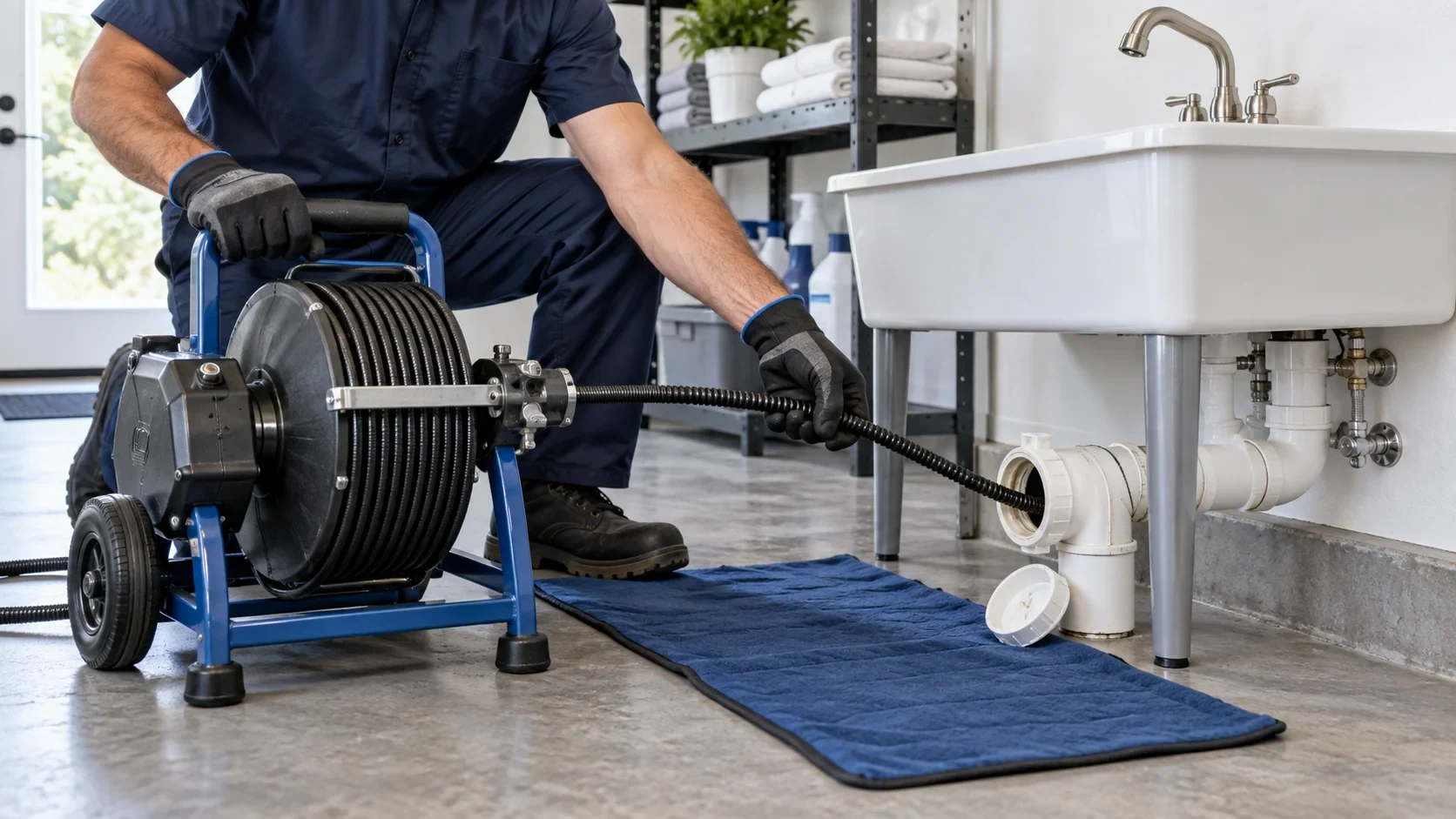
A professional can review access, choose suitable clearing equipment, and check drainage afterward. If the symptoms suggest a pipe condition rather than ordinary buildup, a sewer camera inspection may help guide the next step.
Help keep the drain clear afterward
Use drain strainers where appropriate, collect grease for disposal instead of pouring it down the sink, and keep wipes and other solids out of toilets. Ask what was found during the service and whether any follow-up is recommended. For homeowners in Upland and the Inland Empire, Cruz provides drain cleaning focused on the affected line and the symptoms you report.