What a healthy sewer line does
Individual fixture drains connect to larger piping that carries wastewater away from the property. Dependable flow through that shared system supports normal use of bathrooms, kitchens, and laundry areas. A problem farther along the line can therefore affect more than the fixture where you first notice it.
Keeping the line functioning is about both flow and pipe condition. Cleaning can address an obstruction, while a leaking or damaged section may need a different type of work.
Warning signs worth investigating
A single slow sink and several fixtures backing up together are different patterns. Repeated blockages, gurgling associated with drainage, or wastewater returning through another fixture are reasons to discuss the shared drain or sewer line with a plumber. These signs do not establish a diagnosis by themselves.
- Note whether the problem affects one fixture or several.
- Describe what happens when another fixture is used.
- Mention previous clearing and how long it helped.
- Report visible moisture or suspected leakage near the line.
Habits that help protect your drains
Keep grease and food scraps out of kitchen drains. Collect cooled cooking fats for disposal rather than rinsing them into the sink. Use suitable strainers for hair and debris, and keep wipes, hygiene products, and other solids out of toilets.
These habits can reduce avoidable buildup, but they cannot correct a broken joint or deteriorated pipe. If the same symptoms keep returning despite careful use, the next step is investigation rather than assuming the household simply needs a different cleaning product.
Cleaning, inspection, and repair serve different purposes
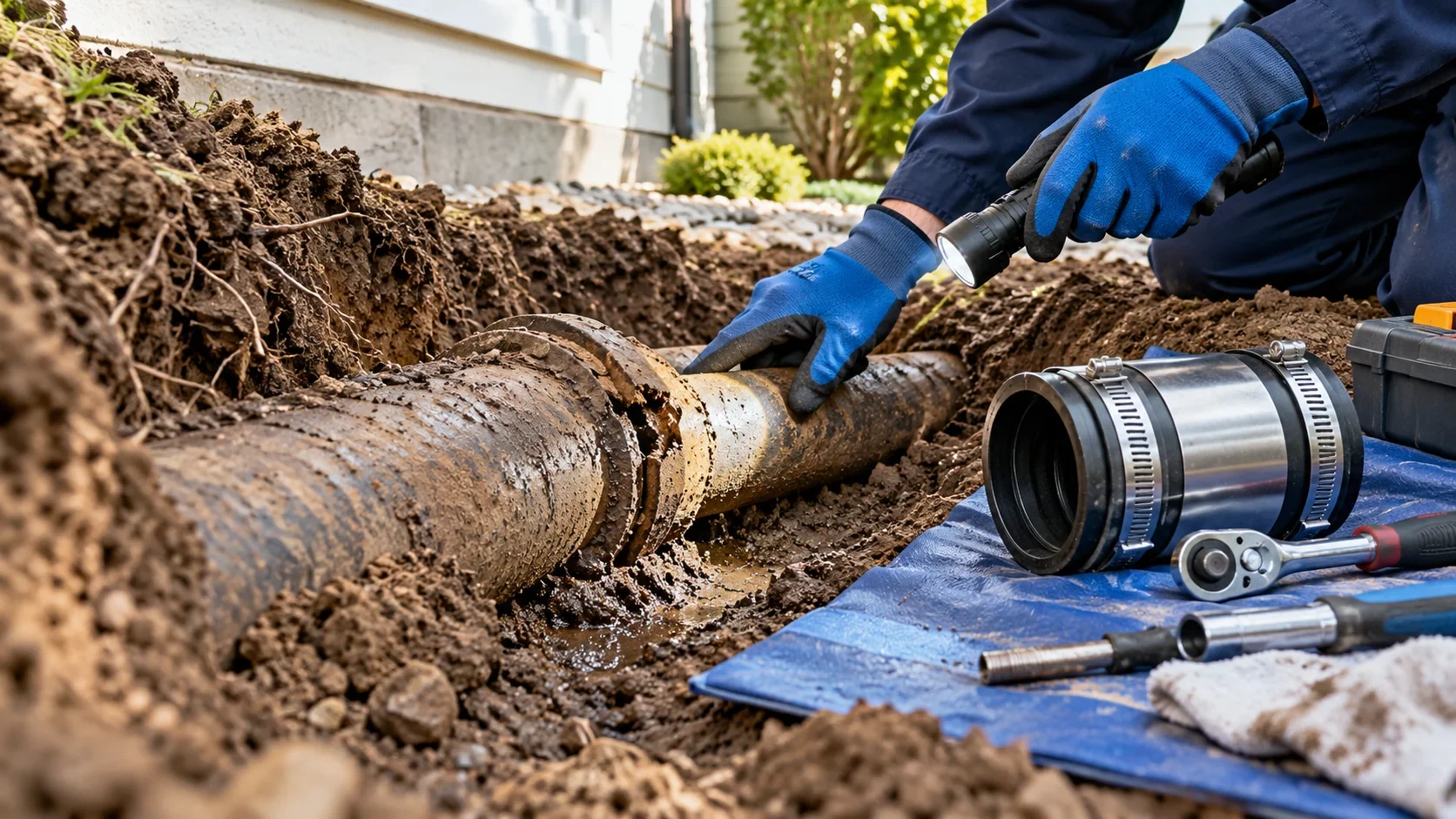
Drain cleaning addresses material restricting flow. A sewer camera inspection provides a view inside accessible piping and can help explain recurring problems. Sewer leak repair addresses agreed damaged sections or connections, while more extensive deterioration may lead to a replacement discussion.
The appropriate sequence depends on access and line conditions. For example, an obstruction may limit the camera view, and clearing alone will not restore a damaged pipe. Ask what each recommended service is intended to establish or resolve.
A practical plan for your property
For a sewer concern in Upland or the Inland Empire, begin with the symptoms and any history of previous work. Cruz can explain the assessment, the available access, and the recommended next step. If wastewater is backing up, stop using the affected plumbing until the situation has been assessed rather than repeatedly testing the line with more water.